Every feature from all five editions for 15 days.
Method Validation edition from US$ 475 a year · 30-day money-back guarantee.
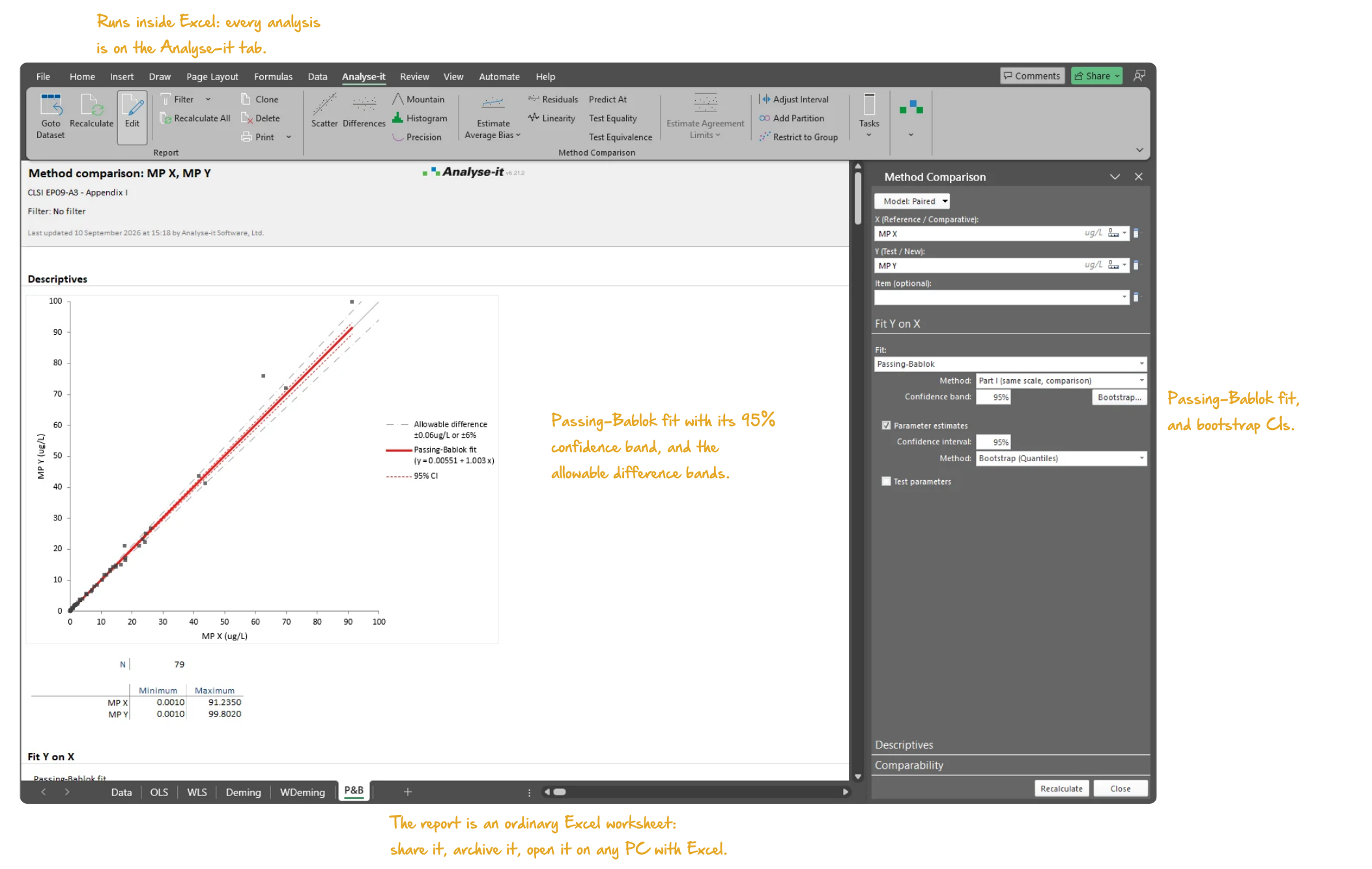
Excel’s LINEST function and chart trendline fit an ordinary least-squares line and stop. The reference method is assumed error-free, the errors normally distributed, and a single outlier can pull the whole line. Passing-Bablok is often the first regression you run in a method comparison study. The method makes no distributional assumptions, is inherently resistant to outliers and does not need the precision ratio between the methods. But the slope and intercept are only useful if the linear model holds across the measuring range. If it does not, the bias estimate is misleading and any conclusion drawn from it is unreliable.
Does the linear model hold across the whole measuring range, or only part of it? Is the slope different from 1, and the intercept from 0? At the concentrations where clinical decisions are made, is the bias within what is clinically acceptable? And when bias and imprecision are combined, does the method still meet the allowable total error?
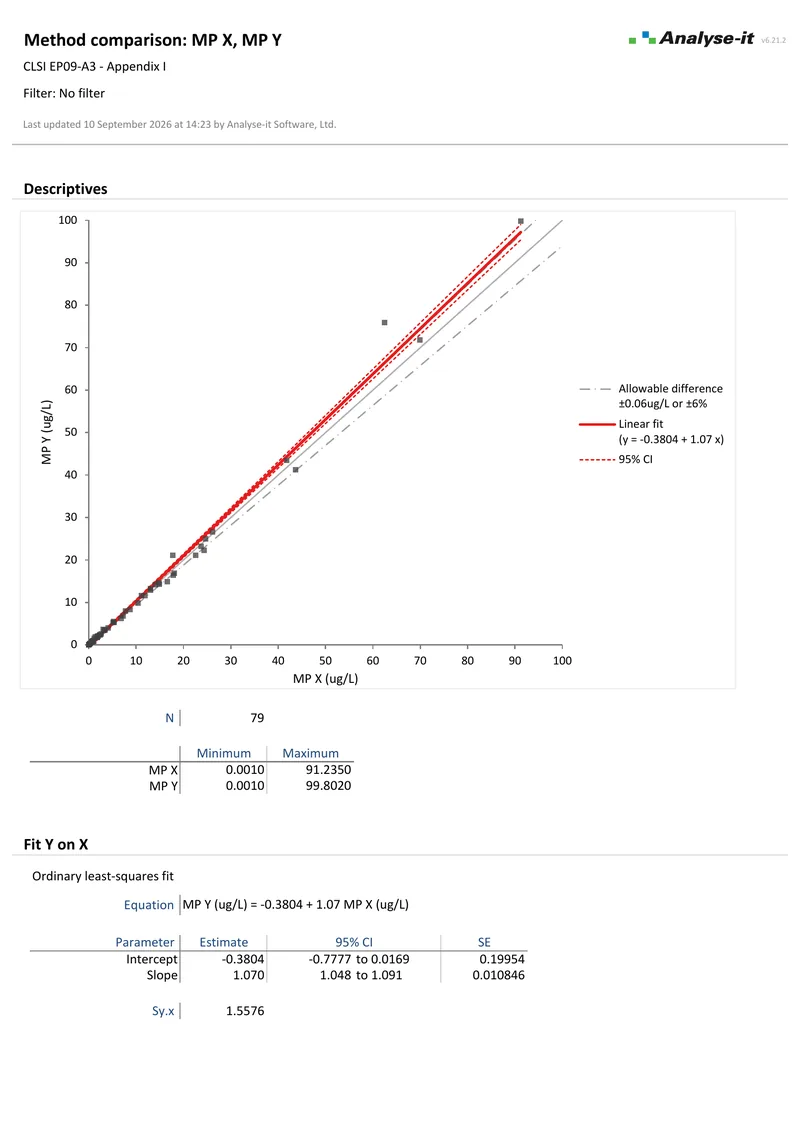
Passing-Bablok is the regression to run before you know the error structure. The method assumes no error distribution, resists outliers and does not need the precision ratio between the methods. Both the original 1983 and the extended 1988 methods are available. The 1988 method extends the procedure to any linear relationship, including methods on different scales and a negative slope. Slope and intercept come with bootstrap confidence intervals for reliable coverage without distributional assumptions, or normal approximation intervals for comparison with published results. The scatter plot shows the fitted line with its confidence band, the identity line, the allowable error bands and the equation.
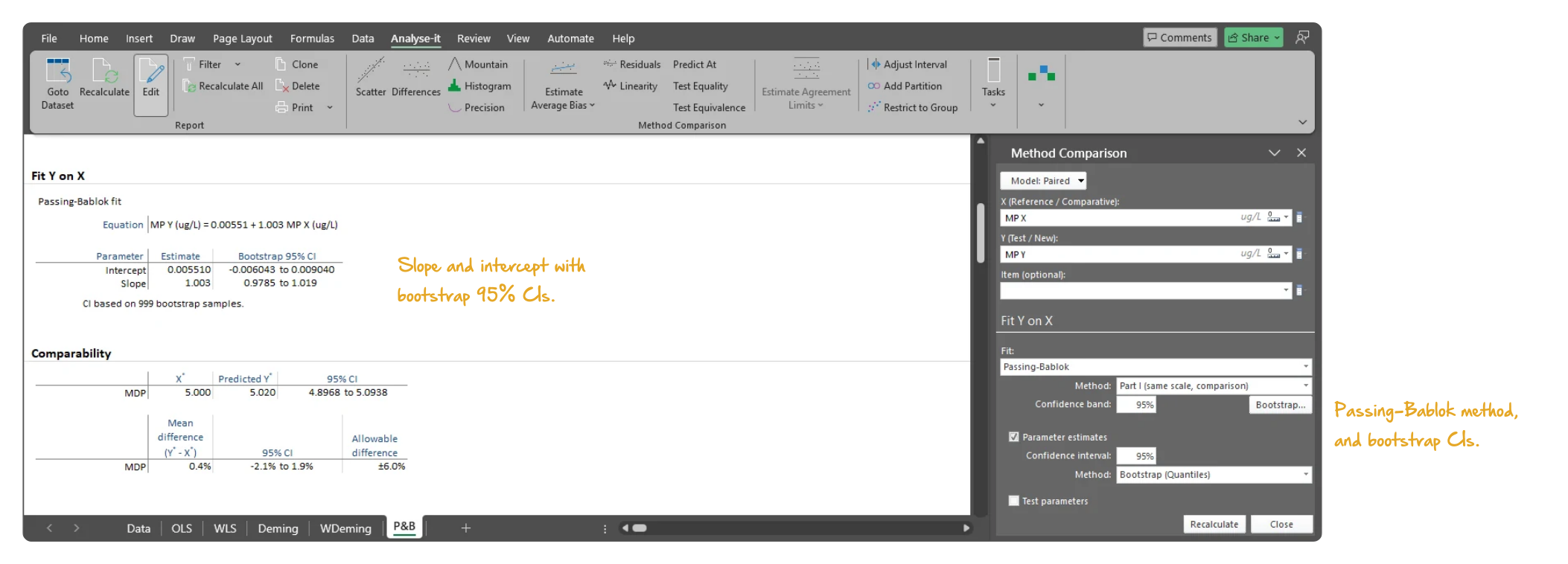
The CUSUM linearity test checks whether the linear model holds across the measuring range. The test is built into the same analysis, with an exact p-value rather than a pass/fail, and the CUSUM plot alongside it. The Kolmogorov-Smirnov linearity test is also available. When linearity does not hold, partition the measuring range into intervals or switch to a different approach, rather than force one line across a nonlinear relationship. Residual plots, raw and standardised, with a histogram show the scatter about the line. Pearson r summarises the correlation, and the precision of each method is reported as SD or CV.
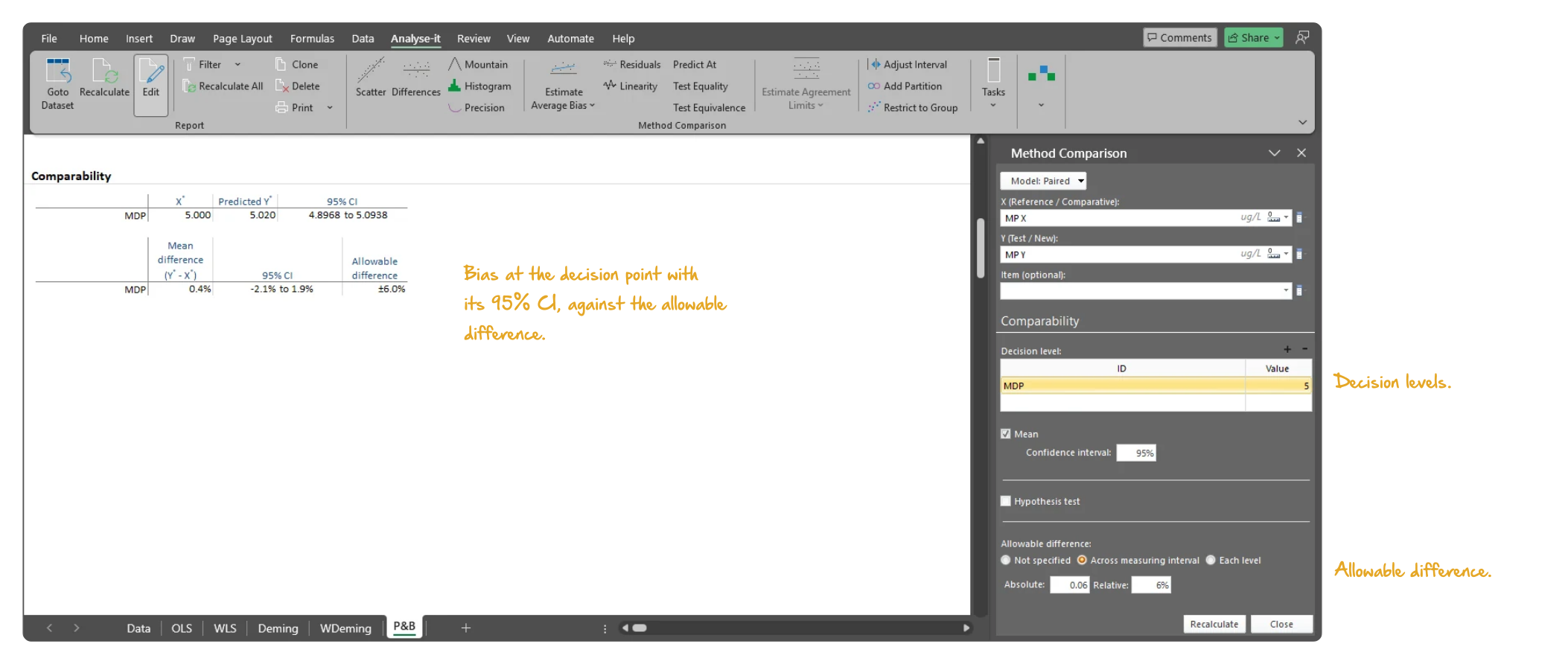
The slope gives the average bias across the range; clinical decisions are made at specific concentrations. Predict the mean bias, with a confidence interval, at any decision threshold you specify. Test equality (is there a significant difference?) and equivalence (is the difference within what is clinically acceptable?) at each point per EP09-A3. The allowable difference can be an absolute concentration, a percentage or a combination — such as “10%, with a minimum of 5 mg/dL”.
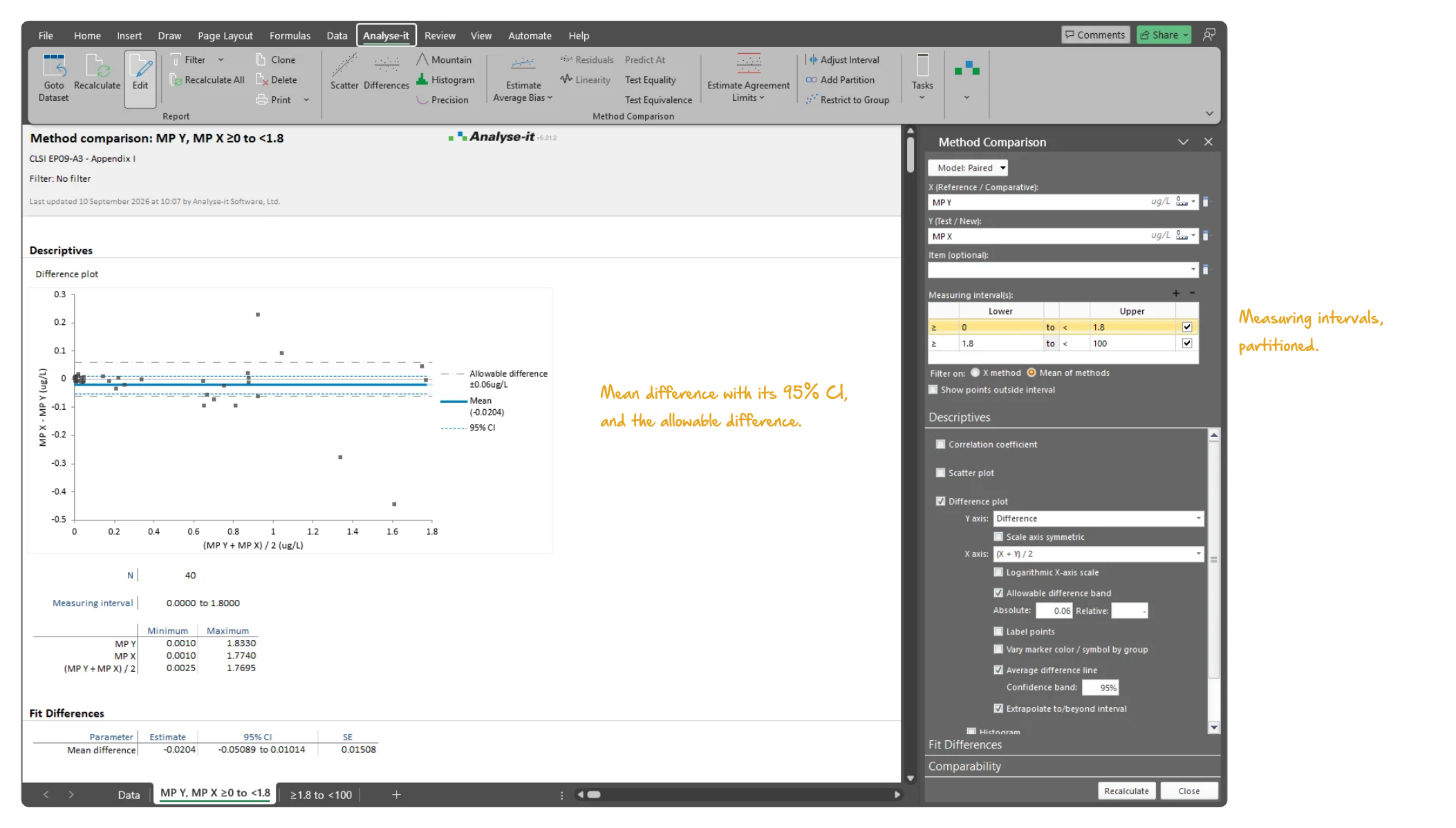
One regression across the whole range is wrong when precision changes with concentration or the relationship is linear over only part of it. Partition the data into separate measuring intervals, each with its own regression, bias estimates and comparability assessment. Each interval gets its own allowable difference per EP09-A3. Or reduce the interval to the range the comparison supports. Use any fit within an interval — Passing-Bablok in one, Bland-Altman or Deming in another. Measure in singlicate, duplicate or any number of replicates. Within-subject variation is estimated directly from the replicate structure and the confidence intervals adjusted accordingly, not approximated by averaging.
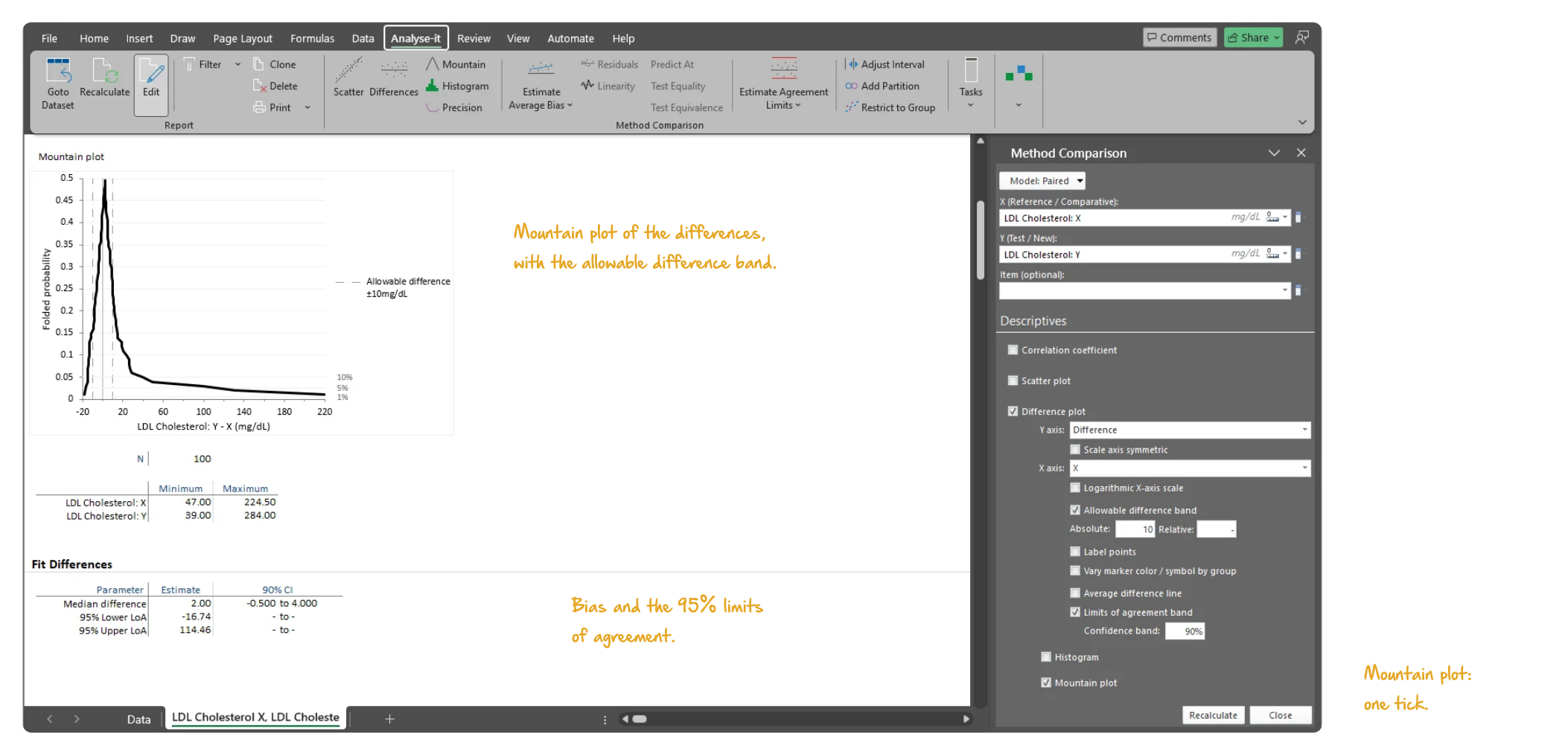
A method can pass on bias and still fail in use, because bias and imprecision act together. Per EP21-A, the bias estimate is combined with the imprecision of the test method and the total compared against the allowable error at each decision point. One pass/fail assessment accounts for both. The difference plot — difference, relative difference or ratio — shows every difference against the allowable difference band, with a histogram alongside. The mountain plot shows the same differences as a folded cumulative distribution against the same band.
See Passing-Bablok regression results in detail — scatter plots, bias at decision points and CUSUM linearity testing — using CLSI example datasets you can download and follow along with.
 10 pages
EP09-A3 — Appendix I
10 pages
EP09-A3 — Appendix I 2 pages
EP09-A3 — Appendix I
2 pages
EP09-A3 — Appendix IPassing-Bablok is one of five regression methods in the method comparison analysis. For a parametric approach, see Deming and Weighted Deming regression. To see the distribution of differences and limits of agreement, see Bland-Altman.
Related guides in the Learn section: choosing a regression for method comparison and why correlation is the wrong statistic.
Try it on your own data first. The 15-day trial is every feature from all five editions — install it and start straight away.
Method Validation edition: US$ 475 per year or US$ 1155 for a perpetual licence. Every purchase carries a 30-day money-back guarantee. Need a quote for purchasing? Choose the licence on the pricing page and click Get a quote.