Every feature from all five editions for 15 days.
Medical edition from US$ 340 a year · 30-day money-back guarantee.
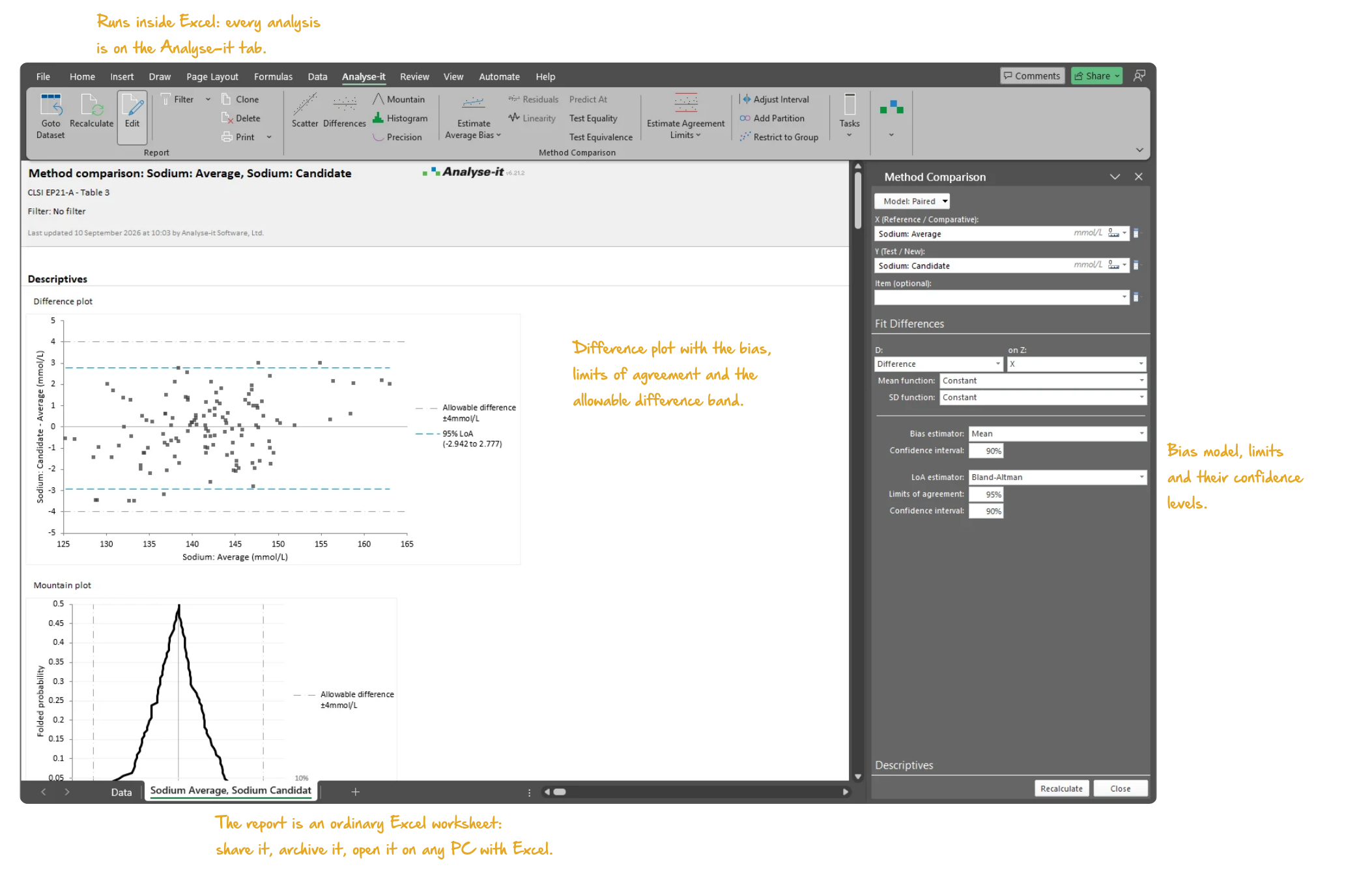
Excel’s CORREL function and chart trendline tell you two methods are related and stop. Correlation does not tell you the methods agree. The question is whether the two agree well enough for clinical use. You ask it when you introduce a new analyser, switch reagent systems or compare a point-of-care device against a laboratory method. The Bland-Altman difference plot answers it. The plot shows the bias between the methods, how it varies across the measuring range and where the limits of agreement fall against what is clinically acceptable.
Is the bias constant, or does it depend on concentration? Do the limits of agreement fall inside the allowable difference, and how wide is the uncertainty on the limits themselves? Were the samples measured in duplicate, and does the analysis use that? And for a test that reports positive or negative, how often do the two methods agree beyond chance?
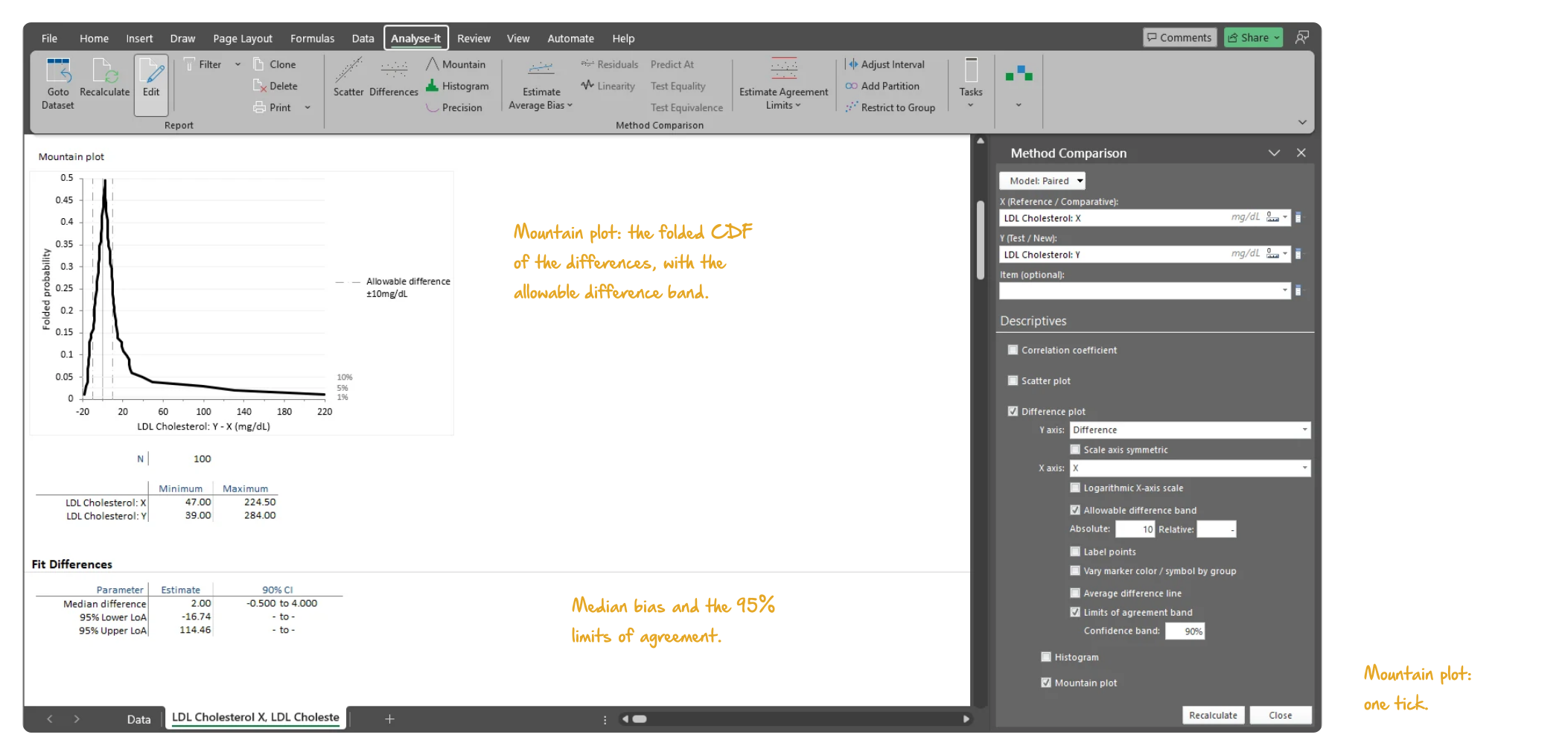
Every difference between the two methods on one plot: the differences against the mean of the methods or against X. The bias and the 95% limits of agreement are drawn on the plot, with a histogram of the differences alongside. Overlay an allowable difference — ±4 mmol/L for sodium or ±10 mg/dL for LDL cholesterol — to see at once whether agreement meets the clinical requirement. Plot the difference, the relative difference or the ratio, colour the points by a factor and check the scatter plot with its identity line. The mountain plot, a folded empirical CDF, shows the whole distribution of differences as a single curve with the same allowable difference band. The proportion outside the requirement is visible at once. The mountain plot is a useful complement to the difference plot when presenting to an audience unfamiliar with limits of agreement.
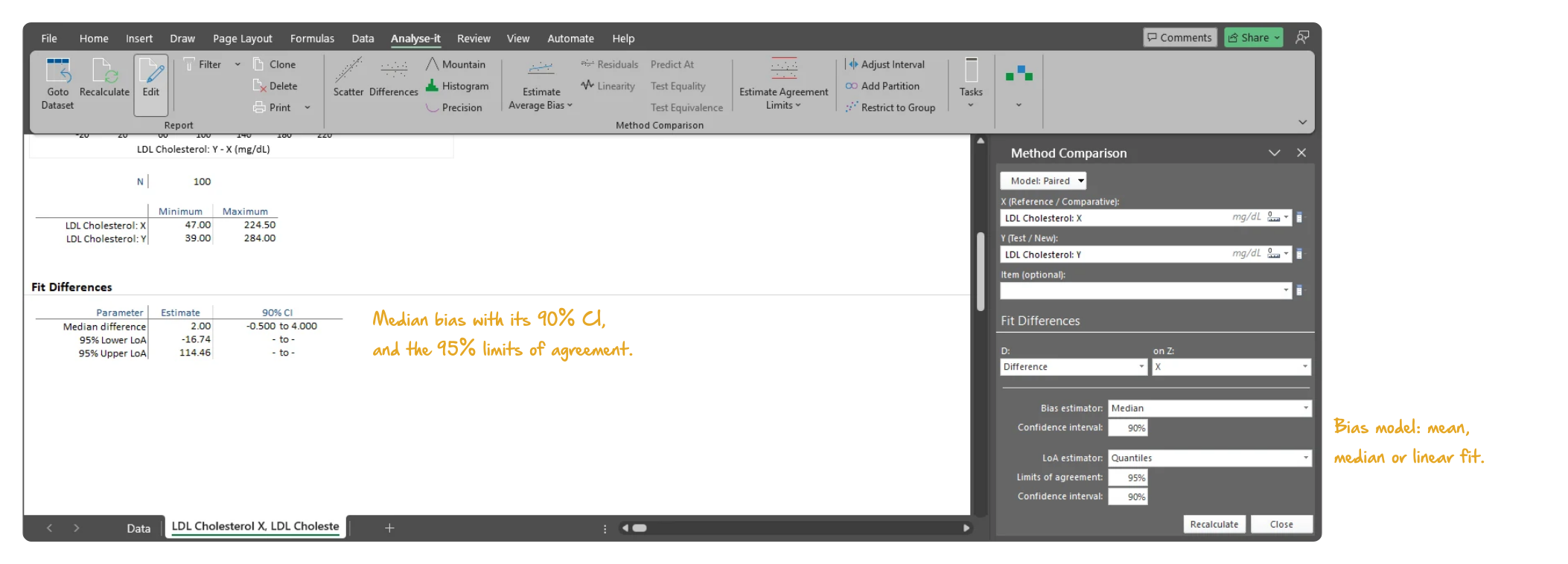
The bias model should match the differences, so three are available in one analysis. Mean bias and median bias, each with a confidence interval, for differences that are centred or skewed. A linear fit on the difference plot separates constant bias (the intercept) from concentration-dependent bias (the slope), so you can judge whether either is clinically meaningful. Limits of agreement are horizontal when precision is constant, and regression-based (V-shaped) when it is not. The limits then widen or narrow with concentration rather than assuming the same variability everywhere.
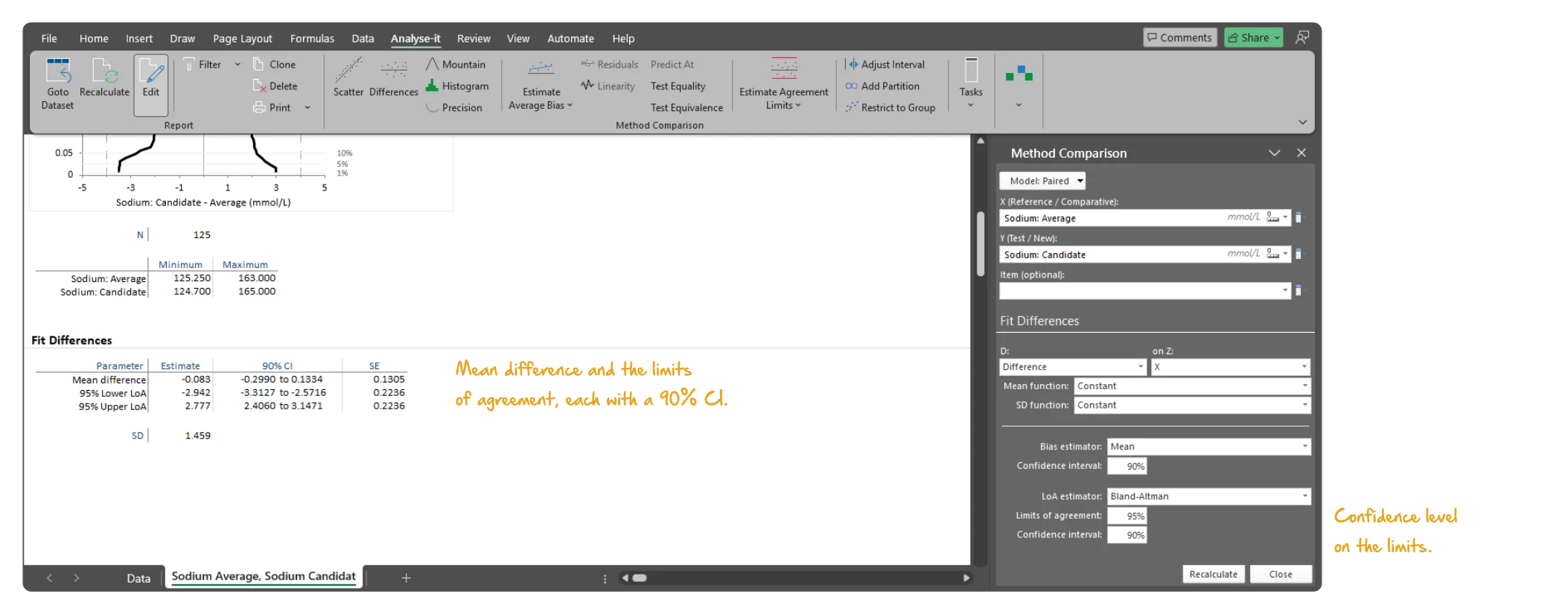
A limit of agreement is an estimate, and its uncertainty matters most when the limit sits close to the allowable difference. Confidence intervals are reported on the upper and lower limits of agreement as well as on the bias. The intervals give the uncertainty in the agreement boundary, not only in the central estimate. Pearson r is reported for readers who expect it, as a measure of how closely the methods are related rather than of agreement.
Averaging replicates before the analysis hides the within-subject variation and narrows the limits. Singlicate, duplicate and replicate measurements are all handled correctly. Within-subject variation is estimated from the replicates and the confidence intervals adjusted accordingly. The precision of each method, as SD or CV, is reported alongside.
Not every comparison is of quantitative measurements. The proportions in positive agreement (PPA) and negative agreement (NPA) quantify concordance when two methods report a binary outcome, positive or negative. Each comes with Clopper-Pearson exact or Wilson score confidence intervals. Kappa and weighted kappa correct for chance agreement, with a kappa test for agreement beyond chance.
See Bland-Altman agreement results in detail — difference plots, limits of agreement and mountain plots — using example datasets you can download and follow along with.
Bland-Altman agreement is one part of the Medical edition, alongside diagnostic accuracy, reference intervals and survival analysis. The edition also includes the full Standard edition for hypothesis testing, regression and descriptive statistics.
Related guides in the Learn section: Bland-Altman limits of agreement explained and why correlation is the wrong statistic.
For the rest of a method validation programme — precision, linearity, detection limits, bias at clinical decision points, regression-based method comparison and reference-interval transference — see the Method Validation edition.
Try it on your own data first. The 15-day trial is every feature from all five editions — install it and start straight away.
Medical edition: US$ 340 per year or US$ 815 for a perpetual licence. Every purchase carries a 30-day money-back guarantee. Need a quote for purchasing? Choose the licence on the pricing page and click Get a quote.