Every feature from all five editions for 15 days.
Medical edition from US$ 340 a year · 30-day money-back guarantee.
Excel has no survival analysis. Averaging the observed follow-up times treats a patient still alive at the last visit as if the event happened then. Excel’s built-in tests and regression assume every observation is complete. Clinical trials, cohort studies and registry analyses all produce time-to-event data: time to death, recurrence, graft failure, hospital readmission. Censored observations are the norm, not the exception.
What proportion survive to one year, and how precisely is that known? Do the treatment groups differ, and does the answer change with the weight given to early or late follow-up? How much does each covariate change the hazard, and does the hazard ratio hold across the whole follow-up?
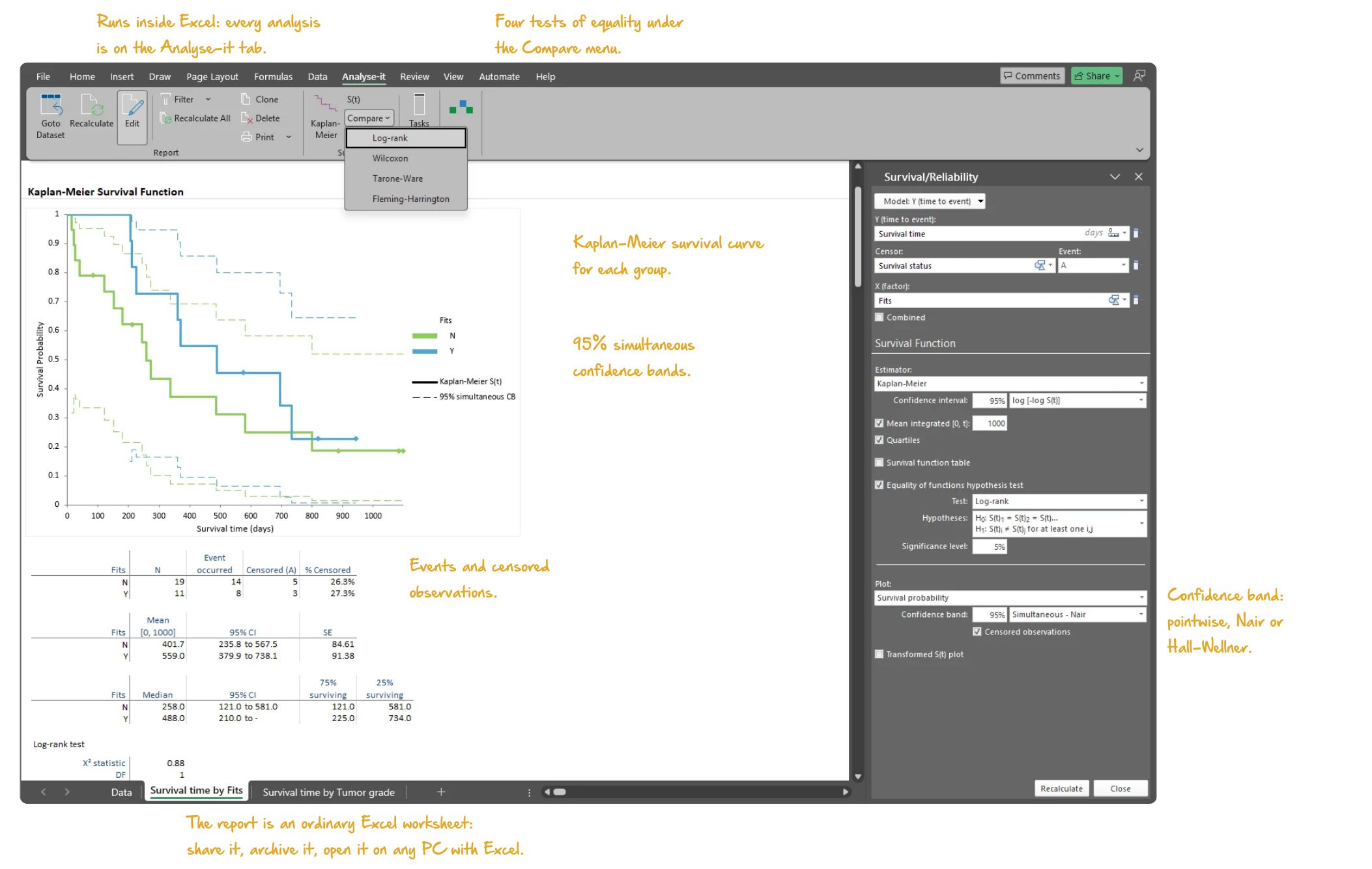
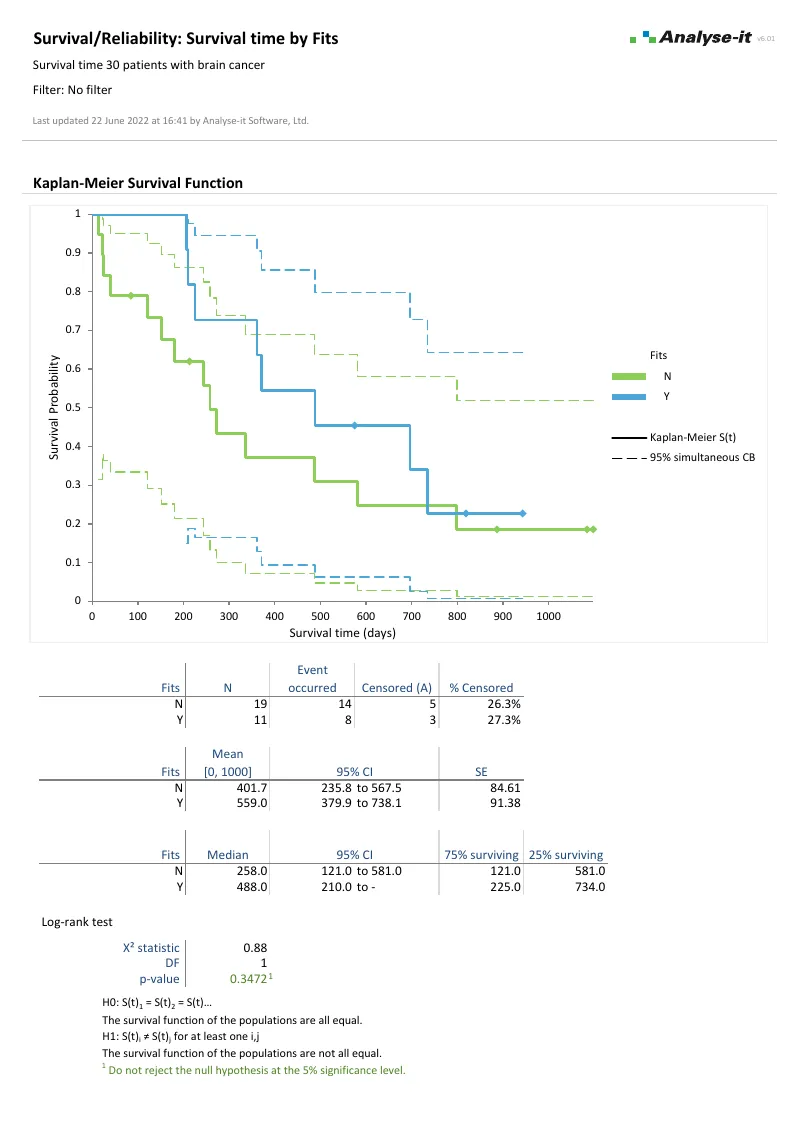
A censored patient is still information, and the Kaplan-Meier estimator uses it. Pointwise, Nair (EP) or Hall-Wellner confidence bands are drawn on the survival curve. Median and quartile survival times come with confidence intervals, and the mean is the area under the curve. Survival and failure probabilities are reported at any time point you specify.

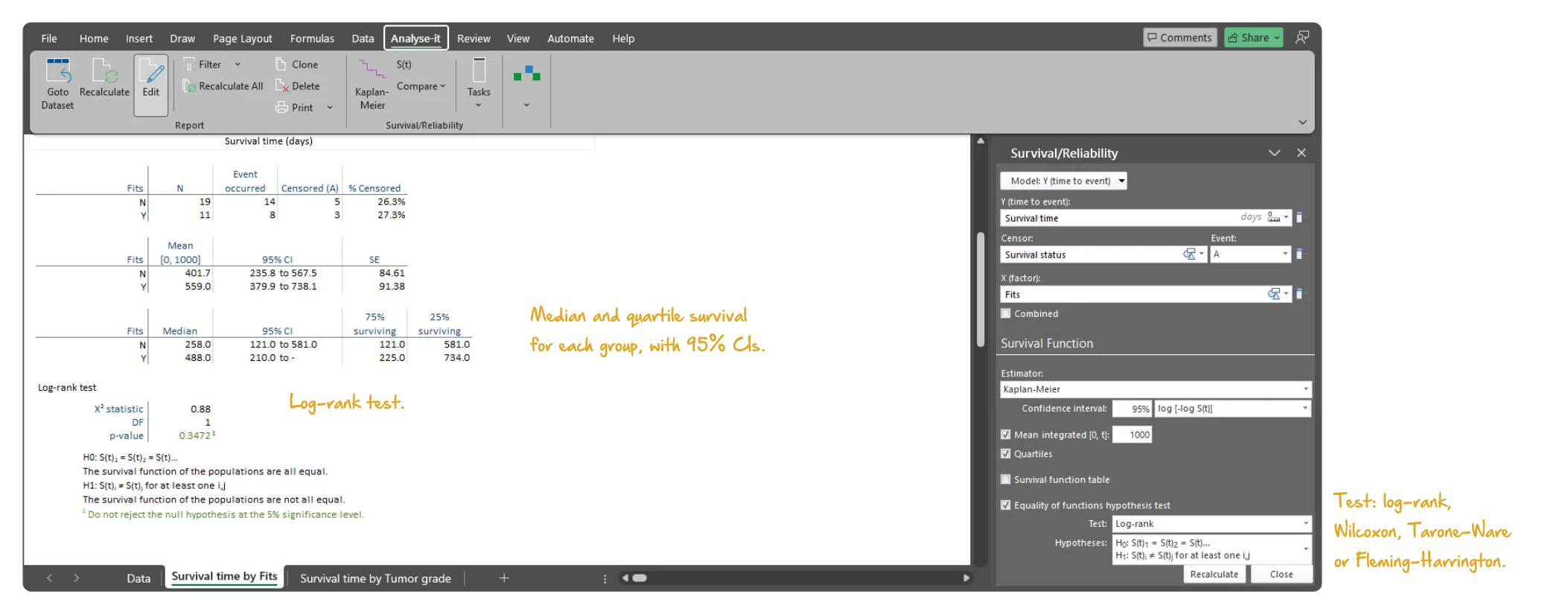
The choice of test can change the conclusion, so all four are available. Log-rank weights every point of follow-up equally, Wilcoxon (Breslow) emphasises early differences, Tarone-Ware sits between the two, and the Fleming-Harrington family lets you specify the weight function. Each tests the equality of the survival functions and handles censoring correctly.
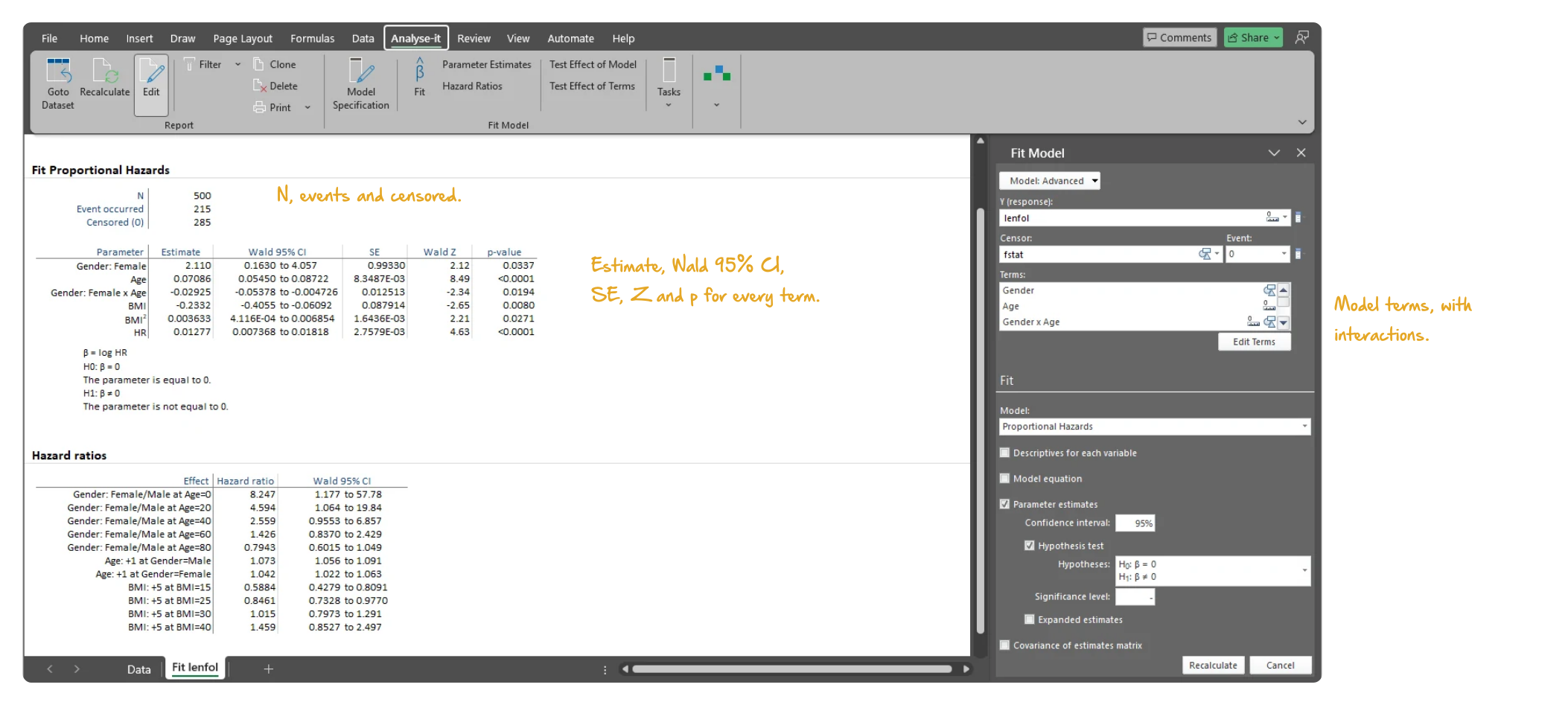
Survival rarely depends on treatment alone. Cox proportional hazards regression models the effect of covariates on the hazard, interactions included. Parameter estimates come with Wald confidence intervals and the covariance of the estimates; likelihood ratio and Wald tests cover the overall model and each term. The baseline survival function is reported and plotted.
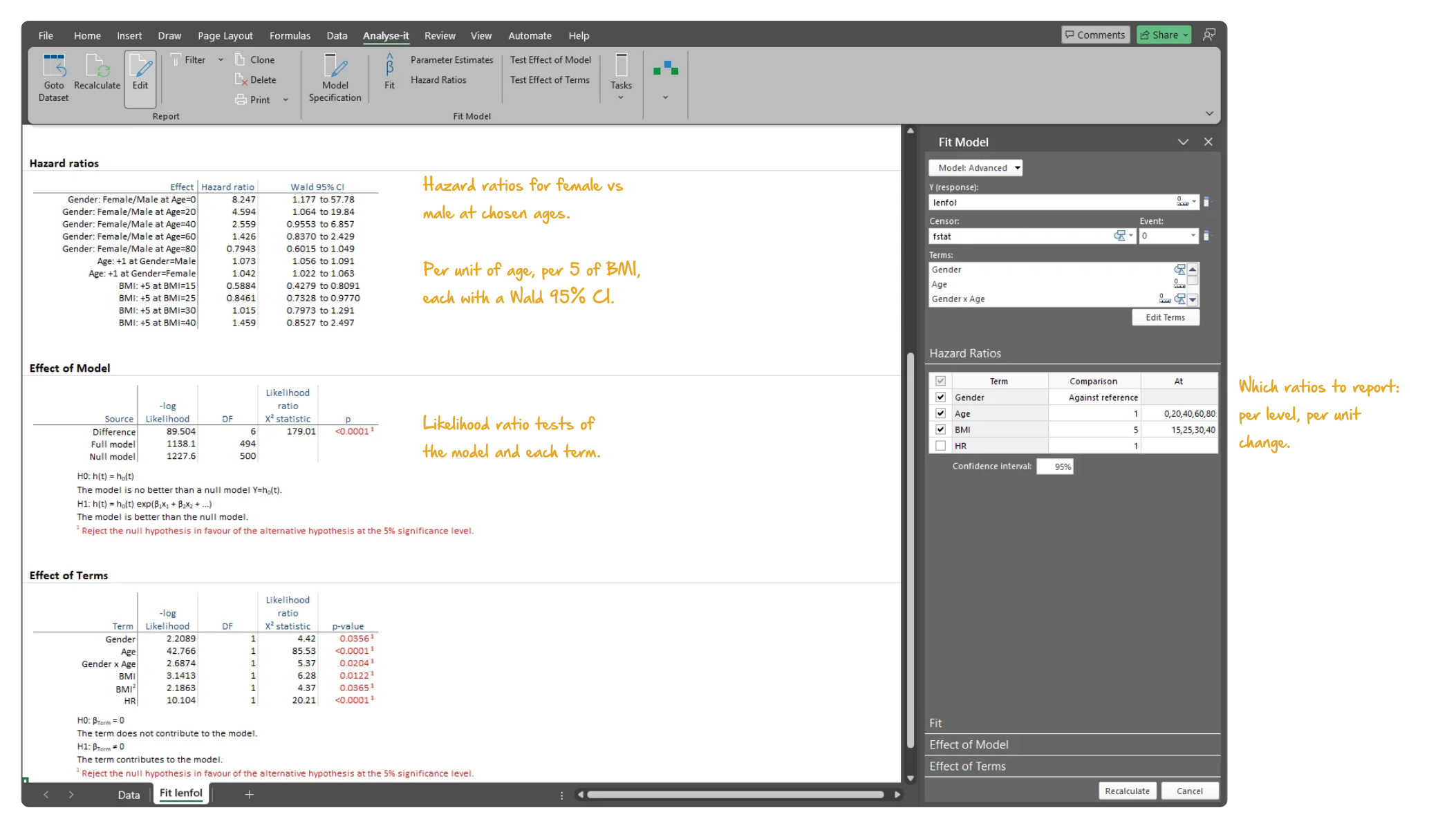
The hazard ratio is the number a clinician reads. Hazard ratios with Wald Z confidence intervals are reported at each level of a categorical covariate and for a specified unit change in a continuous one. With an interaction in the model, ask for the ratio at specific levels of the interacting covariate: treatment A versus B in patients over 65.
Hazard ratios depend on the proportional hazards assumption; two outputs cover the case where it does not hold. Restricted mean survival time is the average event-free time up to a time horizon you specify. The summary does not depend on the assumption and is increasingly used in clinical trial reporting as a complement or alternative to hazard ratios. Transformed log and log–log S(t) versus time plots show whether the hazards are proportional. Where the curves cross or diverge, consider stratification or report RMST instead of hazard ratios.
See survival analysis results in detail — Kaplan-Meier curves, group comparison tests and Cox proportional hazards — using example datasets you can download and follow along with.
 3 pages
Kaplan-Meier survival
3 pages
Kaplan-Meier survival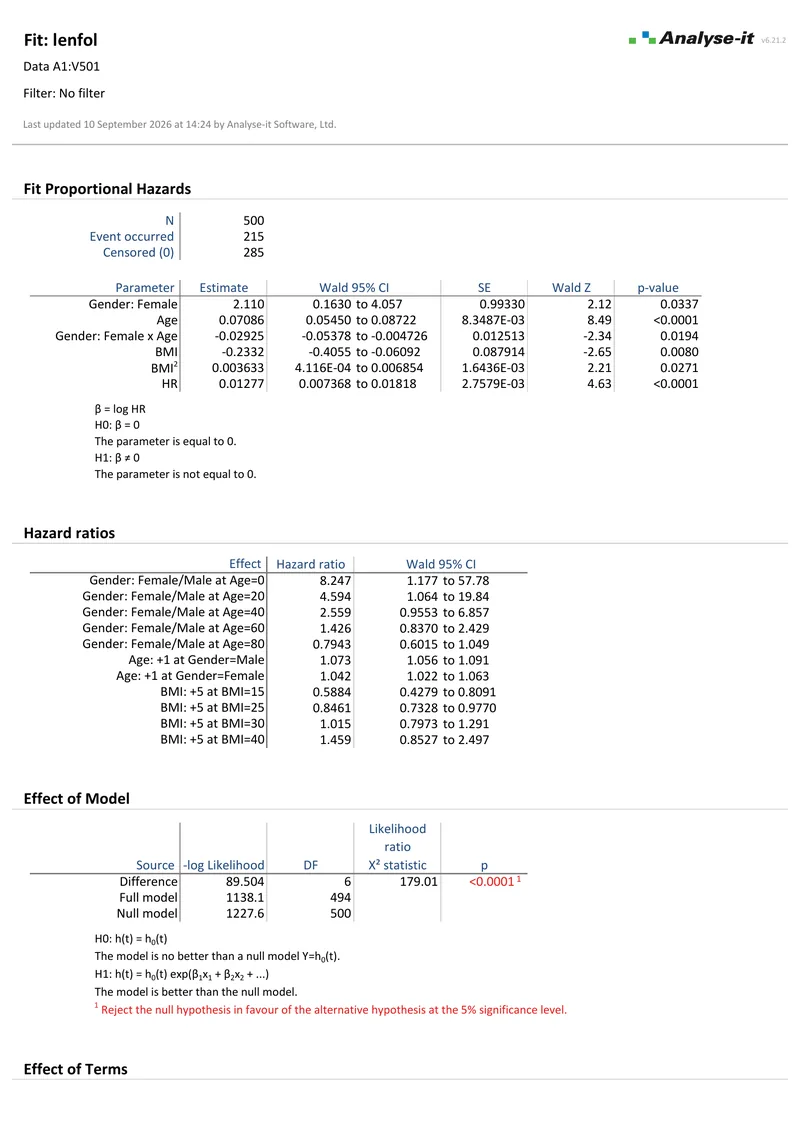 2 pages
Cox proportional hazards
2 pages
Cox proportional hazardsSurvival analysis is one part of the Medical edition, alongside diagnostic accuracy, Bland-Altman agreement and reference intervals. The edition also includes the full Standard edition for hypothesis testing, regression and descriptive statistics.
Related guides in the Learn section: Kaplan-Meier survival curves, comparing survival between groups and Cox proportional hazards.
Try it on your own data first. The 15-day trial is every feature from all five editions — install it and start straight away.
Medical edition: US$ 340 per year or US$ 815 for a perpetual licence. Every purchase carries a 30-day money-back guarantee. Need a quote for purchasing? Choose the licence on the pricing page and click Get a quote.