Every feature from all five editions for 15 days.
Standard edition from US$ 155 a year · 30-day money-back guarantee.
Excel’s T.TEST function returns a p-value and stops. No confidence interval on the difference, no effect size, no non-parametric alternative for skewed data, no plot of the groups. Student’s t where Welch’s applies understates the uncertainty, and a parametric test on skewed data gives an unreliable p-value. The assumption checks are not optional: they decide which test gives a valid answer.
Are the variances equal, so Student’s t applies, or is Welch’s the safer choice? Are the data normal enough for a parametric test at all? By how much do the groups differ, and is the difference large enough to matter? Two groups or ten, independent or paired: each combination calls for a different test, and the wrong one invalidates the conclusion.
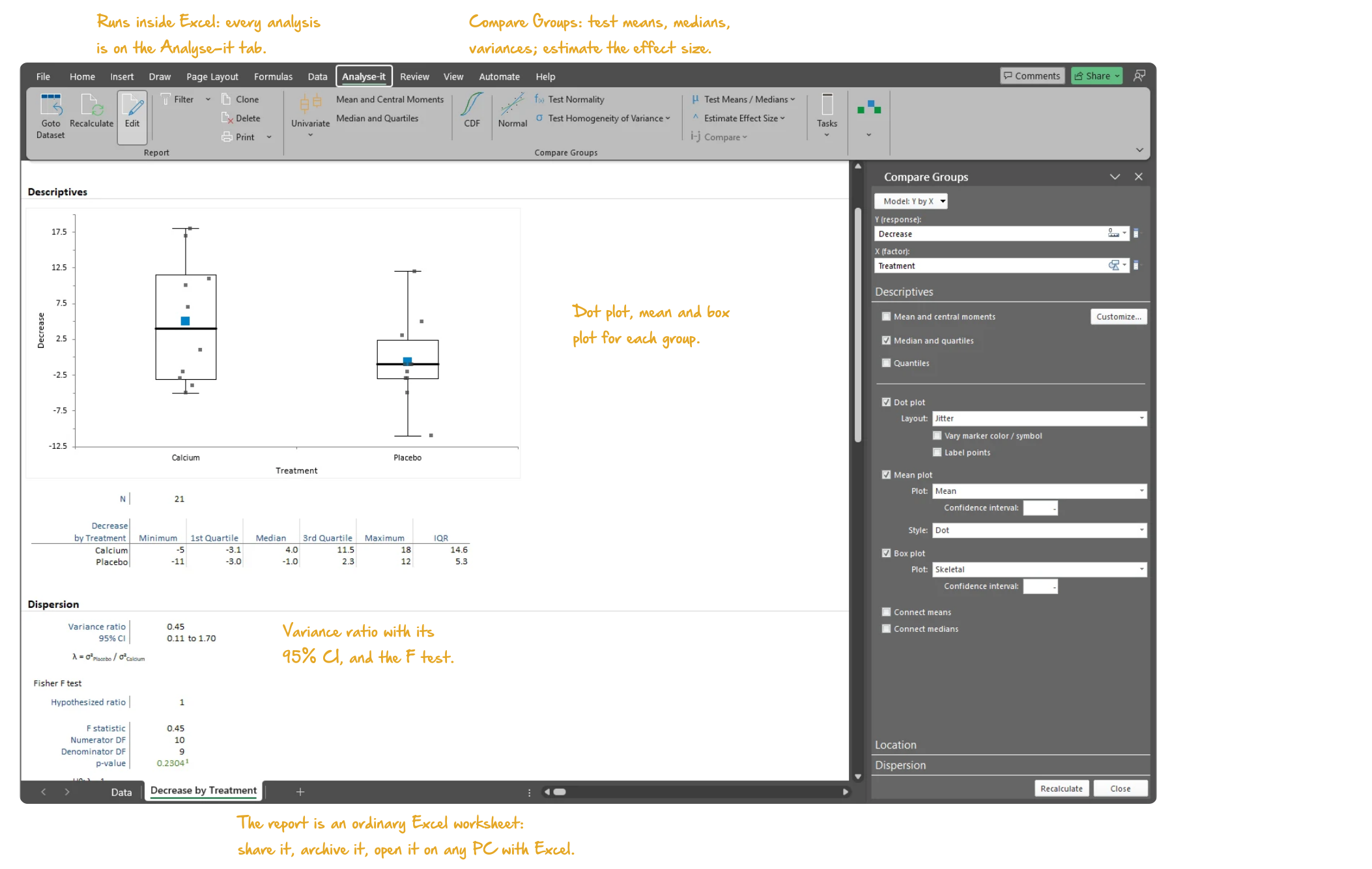
Two independent groups is the commonest comparison, and the right test depends on what the data allow. Use Student’s t-test when the variances are equal and Welch’s t-test when they are not. Use the Z test when the standard deviations are known and Wilcoxon-Mann-Whitney when normality is in doubt. Side-by-side dot plots, mean plots or box plots show the two distributions before you commit to a test, with the descriptive statistics for each group beneath them.
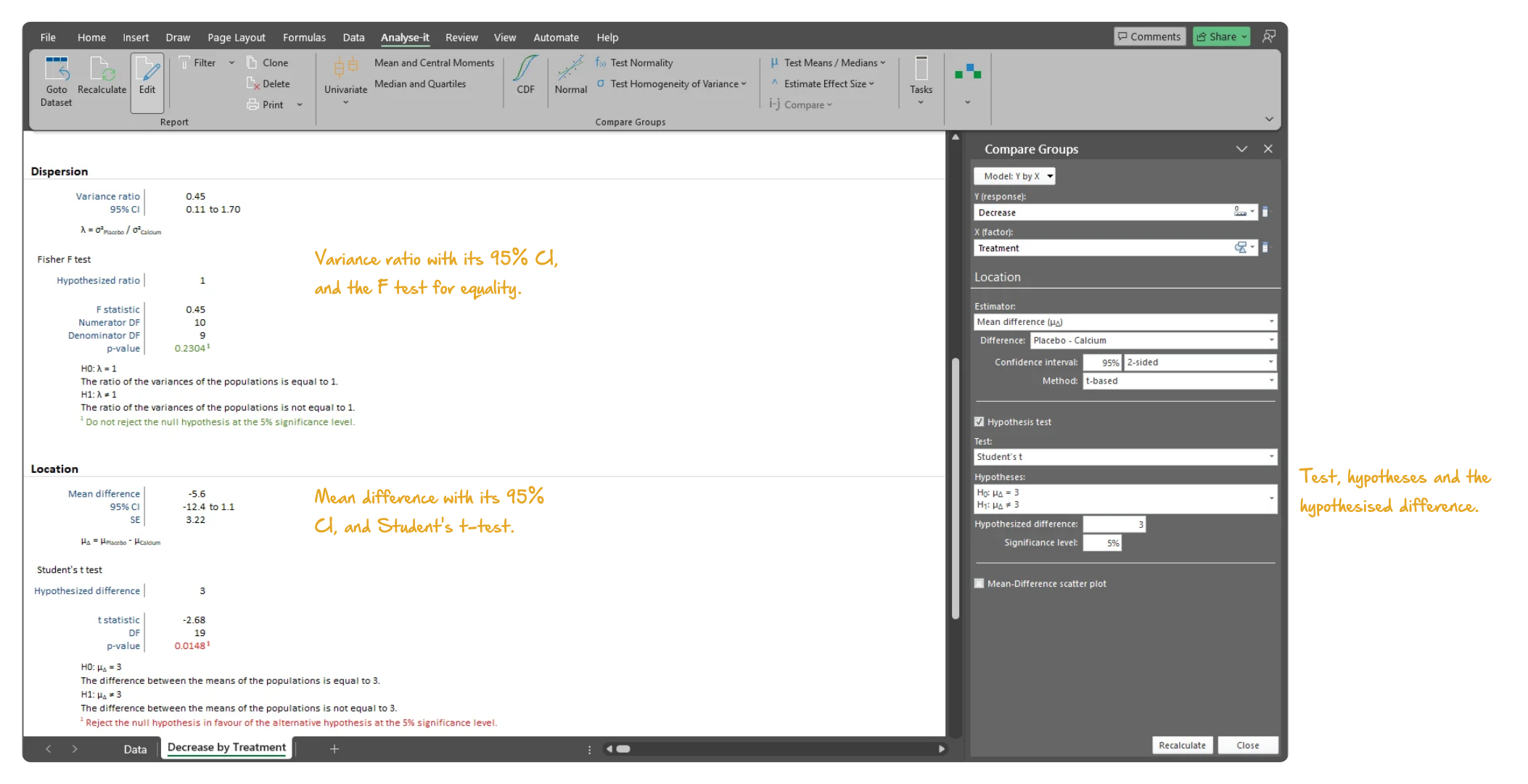
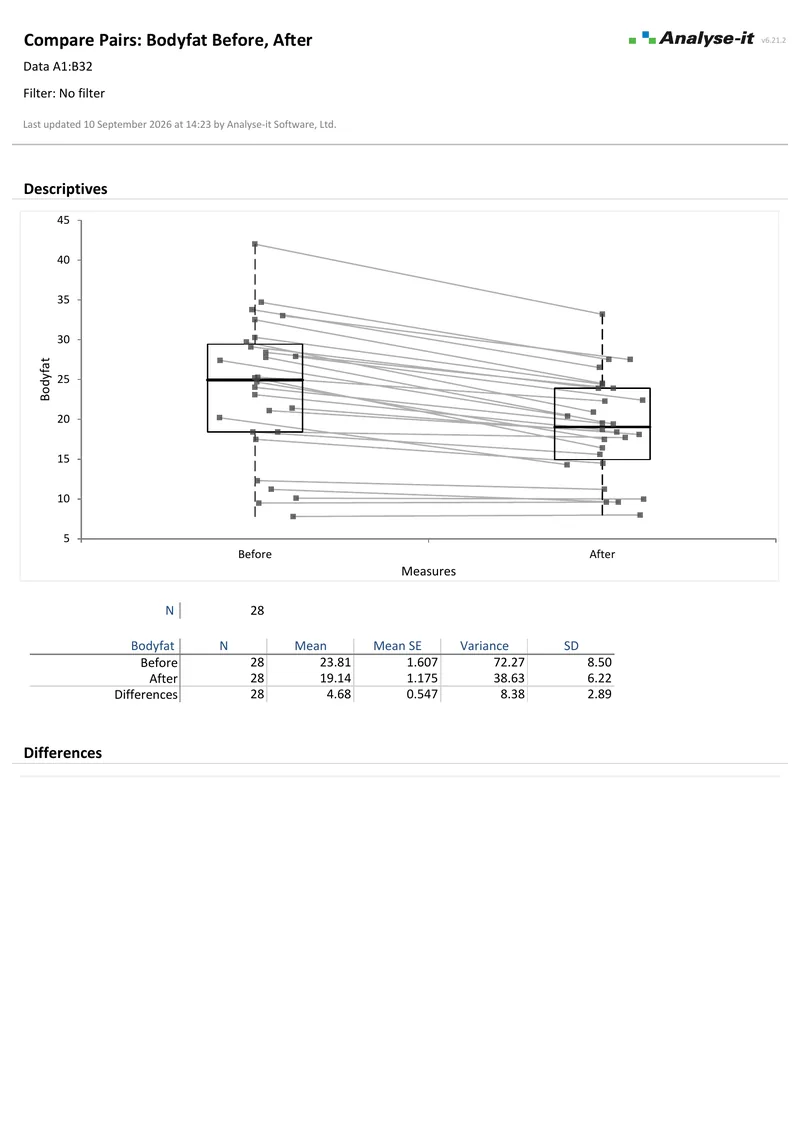
Before-and-after, matched pairs, repeated observations on the same subjects: the pairing carries information that an independent-groups test discards. Paired t-test, Wilcoxon signed ranks and the sign test cover two time points, with the Z test when the standard deviations are known. The difference plot with its histogram shows the distribution of the individual changes, not just their average.

A p-value says whether a difference exists; the effect size says how large it is. Cohen’s d and Hedges’ g put the difference on a standardised scale, with non-central t confidence intervals. The mean difference with its confidence interval keeps the raw scale, and the Hodges-Lehmann location shift gives a robust non-parametric estimate. Report the magnitude alongside the significance.
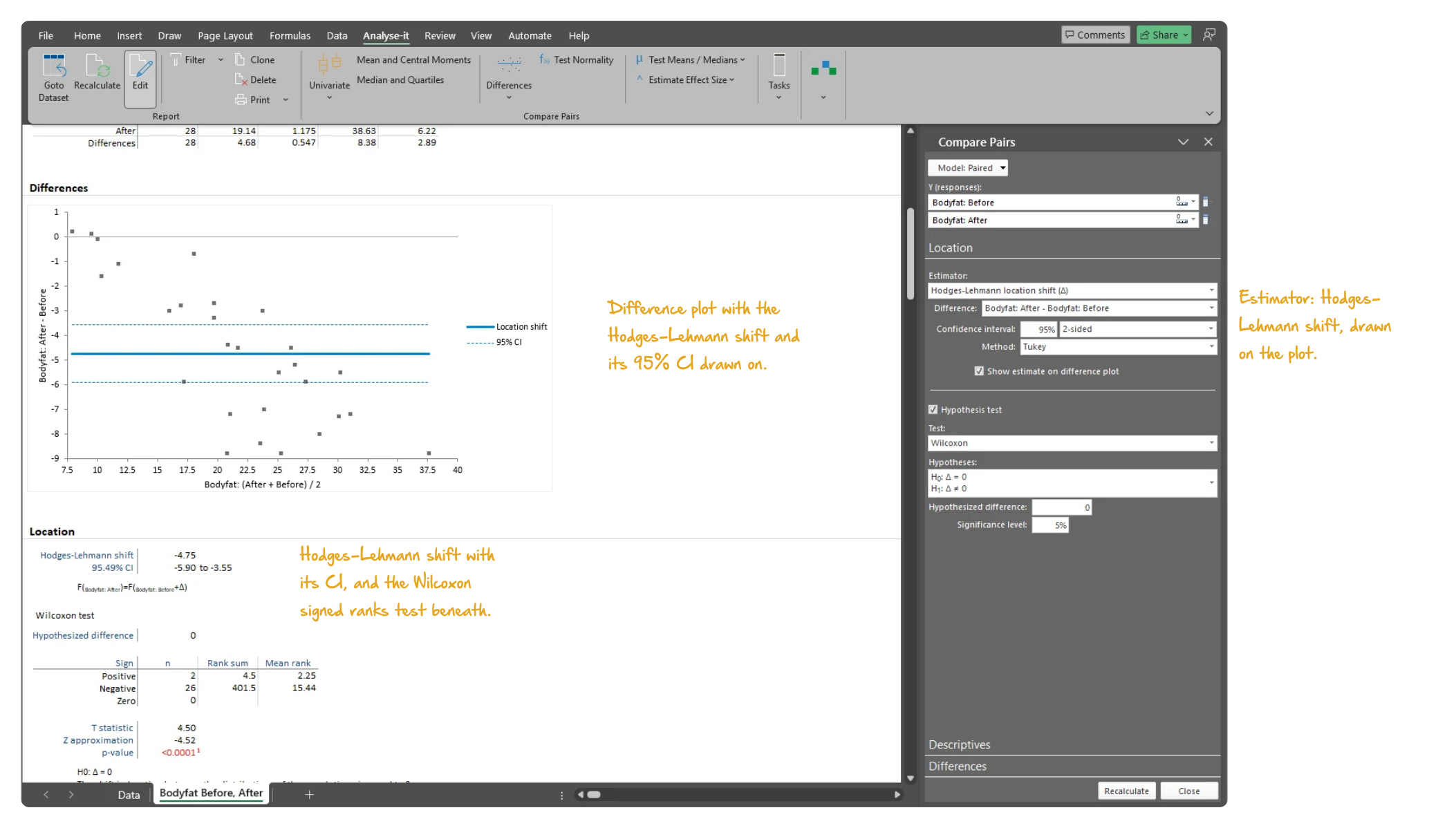
The choice between Student’s t and Welch’s t depends on whether the variances are equal. The F-test for the variance ratio checks two groups; Bartlett, Levene and Brown-Forsythe check three or more. When the assumption fails, the alternative is in the same analysis: switch to Welch’s t-test, Welch’s ANOVA or a non-parametric test without starting over.
Three or more groups call for an analysis of variance, not a run of t-tests. One-way ANOVA, Welch’s ANOVA and Kruskal-Wallis compare independent groups; within-subjects ANOVA and Friedman compare repeated measures. Eight multiple comparison procedures then show which groups differ, with the Mean-Mean scatter plot. The ANOVA and ANCOVA page covers them in full.
See hypothesis test results in detail — t-tests, ANOVA, multiple comparisons and effect sizes.
 3 pages
One-way ANOVA
3 pages
One-way ANOVAHypothesis testing is one part of a complete statistical analysis toolkit. The Standard edition also includes ANOVA and ANCOVA, simple and multiple regression, logistic regression, PCA and factor analysis, descriptive statistics, correlation and categorical data analysis. See everything in the Standard edition →
Not sure which procedure fits the question? Start with choosing the right statistical test, then read Student’s, Welch’s or paired? and what non-parametric tests assume.
Try it on your own data first. The 15-day trial is every feature from all five editions — install it and start straight away.
Standard edition: US$ 155 per year or US$ 395 for a perpetual licence. Every purchase carries a 30-day money-back guarantee. Need a quote for purchasing? Choose the licence on the pricing page and click Get a quote.