Every feature from all five editions for 15 days.
Standard edition from US$ 155 a year · 30-day money-back guarantee.
Excel’s CORREL function returns one Pearson coefficient and stops. No confidence interval, no significance test, no Spearman or Kendall, no scatter plot matrix. A coefficient alone is not enough. A strong Pearson r can hide a non-linear pattern, and a weak r can mask a relationship that is clear in one subgroup and absent in another.
Which variables are related, and how strongly? Is the relationship linear, monotonic or something else entirely? Does it hold within every group, or only overall? Correlation is the exploratory step between describing variables individually and fitting a regression model, and it needs both the numbers and the pictures.
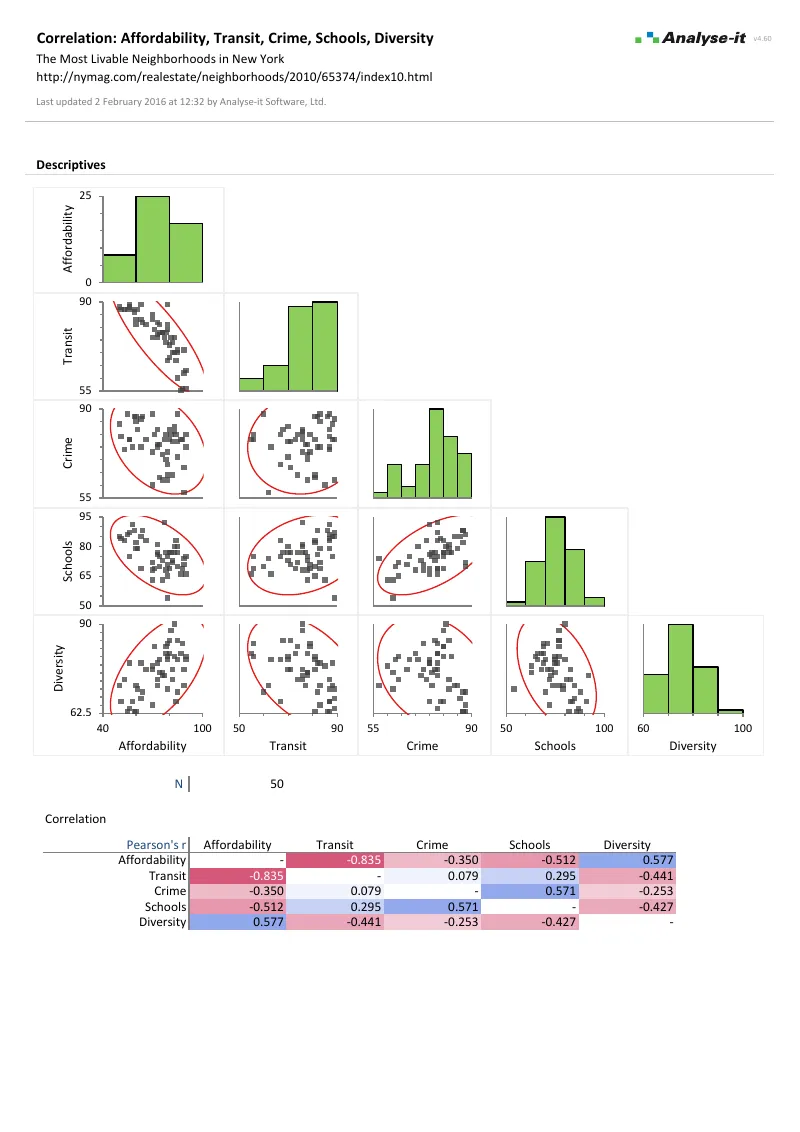
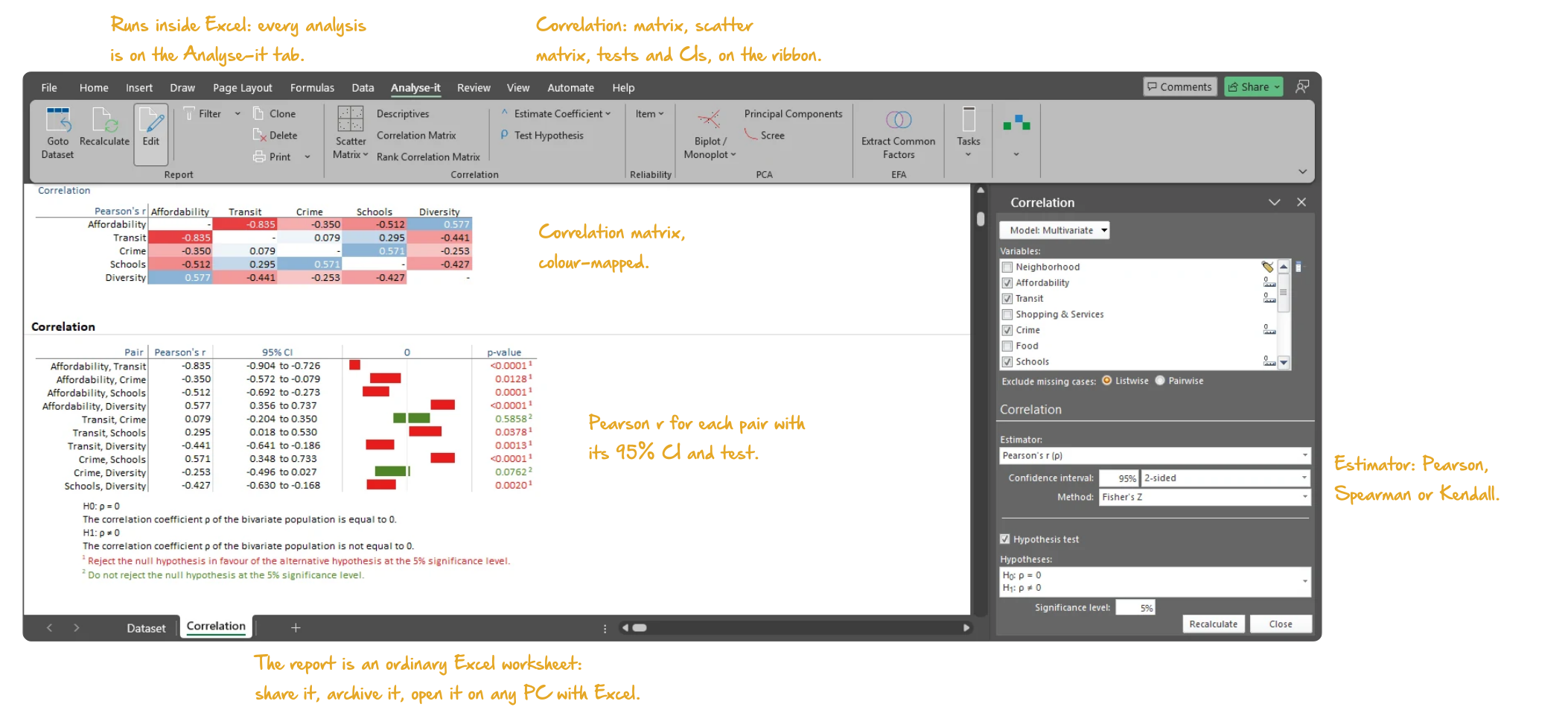
With many variables, the pattern matters more than any one number. The colour-mapped correlation matrix shows the strength and direction of every pairwise relationship — strong positive in one colour, strong negative in another, weak associations fading towards neutral. Which variables cluster together is visible immediately, without reading the individual coefficients. The covariance matrix is available alongside it.
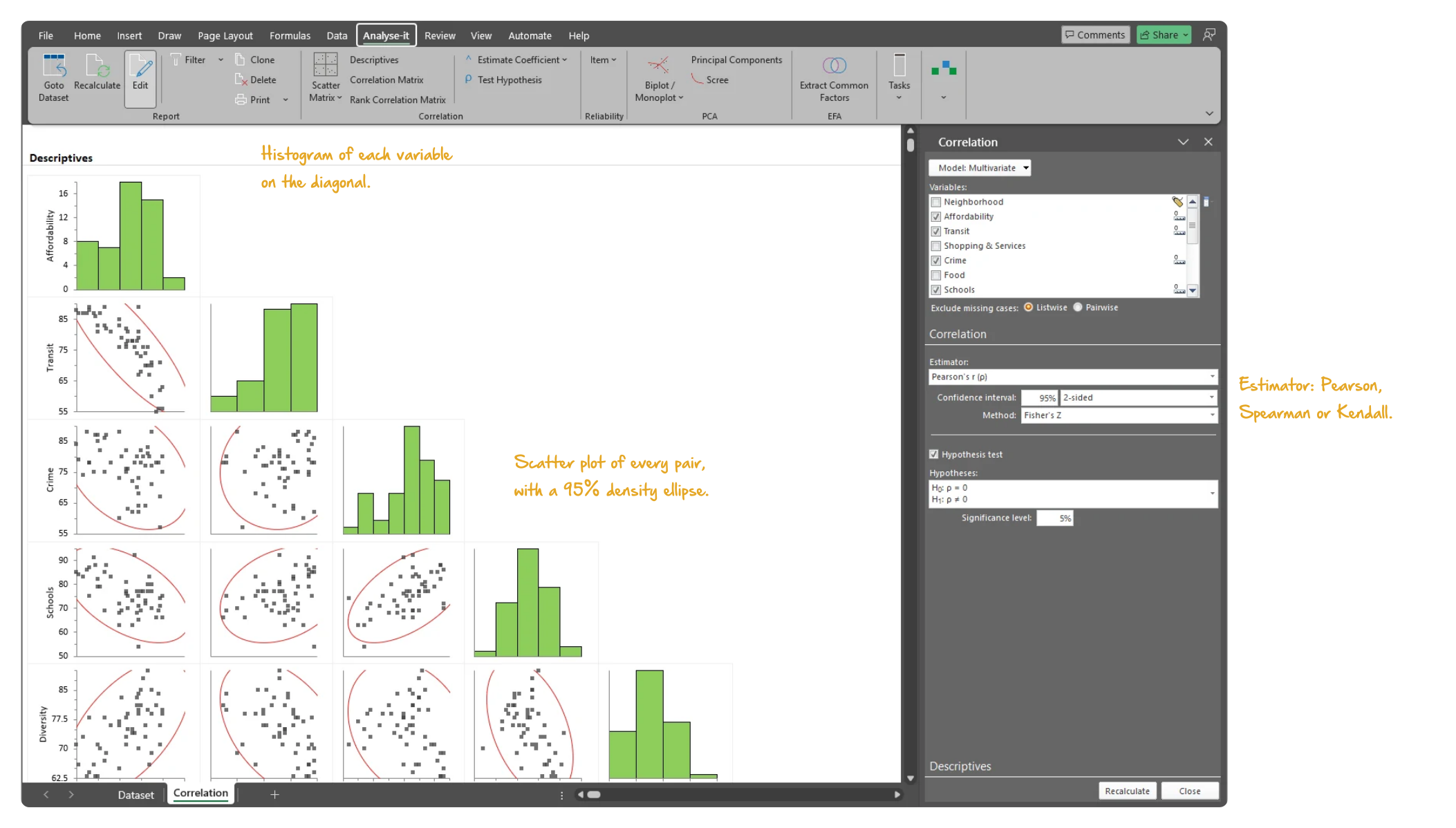
A correlation coefficient summarises a relationship in one number. A scatter plot matrix shows what that number hides — non-linear patterns, clusters, outliers and subgroups that behave differently from the whole. Colour the observations by a factor to see whether a relationship that holds overall fails within groups. The same colouring shows a relationship that looks weak overall but is strong within each group.
The coefficient should match the relationship. Pearson r measures linear association. Spearman rs measures monotonic association — use it when the relationship is consistent in direction but not necessarily straight. Kendall τ measures concordance and is more robust with small samples or tied values. Each comes with a confidence interval — Fisher’s Z for Pearson and Spearman, Samara-Randles for Kendall — not just a point estimate.
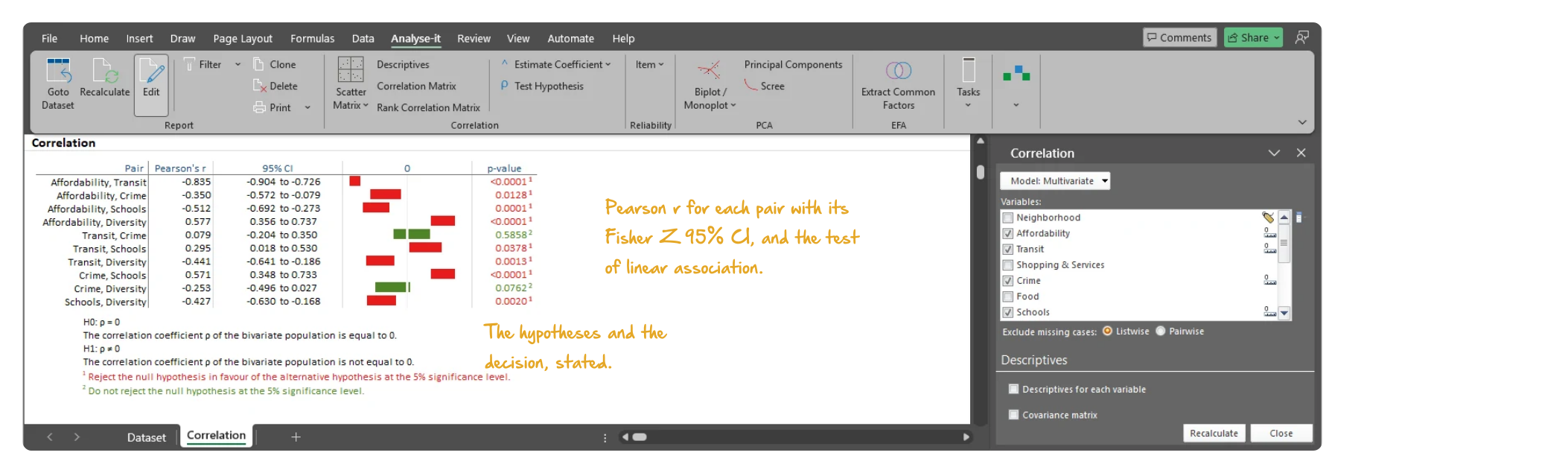
A confidence interval shows how strong the association is; a test shows whether it could be zero. The Pearson test checks for linear association and the Kendall test for monotonic association. Each states the null and alternative hypotheses, reports the p-value and gives the conclusion at the chosen significance level.
See correlation results in detail — colour-mapped matrices, scatter plot matrices and pairwise coefficients with CIs.
Correlation is one part of a complete statistical analysis toolkit. The Standard edition also includes ANOVA and ANCOVA, simple and multiple regression, logistic regression, PCA and factor analysis, descriptive statistics, hypothesis testing and categorical data analysis. See everything in the Standard edition →
Choose and interpret the coefficient with Pearson, Spearman or Kendall? If the goal is to compare two measurement methods, read why correlation is the wrong statistic.
Try it on your own data first. The 15-day trial is every feature from all five editions — install it and start straight away.
Standard edition: US$ 155 per year or US$ 395 for a perpetual licence. Every purchase carries a 30-day money-back guarantee. Need a quote for purchasing? Choose the licence on the pricing page and click Get a quote.